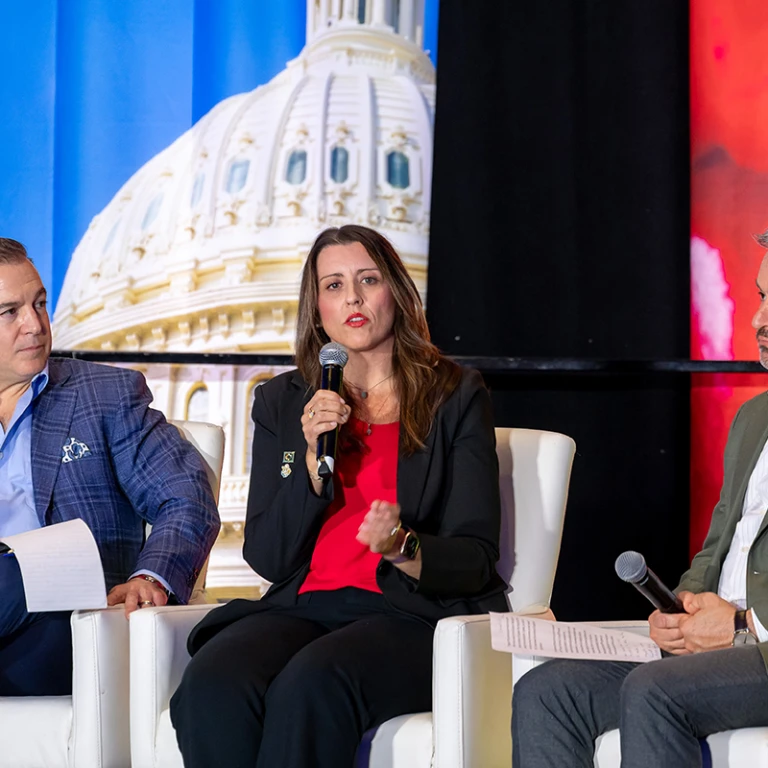
House Democrats are touting legislation that would create a special investigator for agricultural competition and permanently allow year-round sales of E15 fuel as inflation-fighting tools in a package to be considered on the floor later this week, according to House Majority Leader Steny Hoyer (D-Md.).
“The House will consider the Lower Food and Fuel Costs Act from the Committee on Agriculture and the Committee on Energy and Commerce to address food prices and help bring down the cost of fertilizer for farmers while providing more affordable options at the gas pump for Americans,” Hoyer said during a floor colloquy.
Try a 1-month trial subscription for more ag policy news & updates. Start trial here.
- The package (HR 7606) incorporates seven bills that advance Democratic messages that a few companies’ domination of the meat and poultry processing has contributed to higher food prices and that lawmakers’ are tackling pocketbook issues, such as gasoline prices of around $5 a gallon.
- The bill would establish an Office of the Special Investigator for Competition Matters at USDA, giving it subpoena powers and the ability to file civil lawsuits or take administrative actions over violations by meatpacking companies and live poultry dealers under the Packers and Stockyards Act of 1921. The legislation doesn’t authorize funding, but the Congressional Budget Office estimates an office of 10 attorneys and staff would cost a total of $9 million over fiscal years 2022 to 2027. House Agriculture ranking member Glenn “GT” Thompson (R-Pa.) called the bill’s language flawed and said it would add regulatory compliance costs that would raise grocery expenses for consumers.
- The measure would use loans, loan guarantees and grants to help communities and individuals expand networks of local and regional processors and increase job opportunities. It would authorize $100 million for each fiscal year from 2023 to 2025. The bill also would authorize $20 million per fiscal year for fiscal 2023 through 2025 for grants.
- The bill would authorize $200 million in funding for fiscal years 2022 and 2023 for competitive USDA grants to fuel retailers and distributors to offset costs of installing blender pumps that can dispense fuel mixtures with more than 10% ethanol or 20% biodiesel. The goal is to increase the availability of such fuels and support increased biofuel production and use.
- The bill would make permanent the waiver the Biden administration announced in April to allow summer sales of a gasoline blend of 15% ethanol and 85% gasoline. The administration said the decision was among steps it was taking to try to reduce pump prices since ethanol costs less than gasoline. The measure would amend the law to allow ethanol blends of more than 10% to qualify for sales between June 1 and Sept. 15. A federal court had ruled that the Trump administration didn’t have the authority under the law to allow such sales.
- The package includes language that would increase cost-sharing payments and federal payments through existing USDA conservation programs to encourage farmers and ranchers to buy precision agriculture equipment, systems and technology. The Environmental Quality Incentives and the Conservation Stewardship programs would make higher payments to producers to help meet the expense of precision technology and higher payments to producers who use precision agriculture practices. Loan guarantees through the Conservation Loan and Business and Industry programs would be available for private lenders to encourage them to finance farmers and ranchers’ precision agriculture purchases.
- Language would direct USDA to establish the Agricultural and Food System Supply Chain Resilience and Crisis Response Task Force within 60 days of enactment. The Agriculture secretary would name the task force leader, who would be a special adviser to the department. The special adviser would have 270 days after the bill is enacted to report on the food and agricultural system. The task force would sunset by Sept. 30, 2023.
- The measure would authorize $500 million to be used in fiscal years 2022 and 2023 for additional payments to participants in the Environmental Quality Incentives Program who are using conservation practices to limit fertilizer and other nutrient runoff. The payments would be in addition to any cost-sharing funds a farmer or rancher already receives through the program. However, a participant couldn’t receive total payments that exceed the cost for managing nutrient runoff.