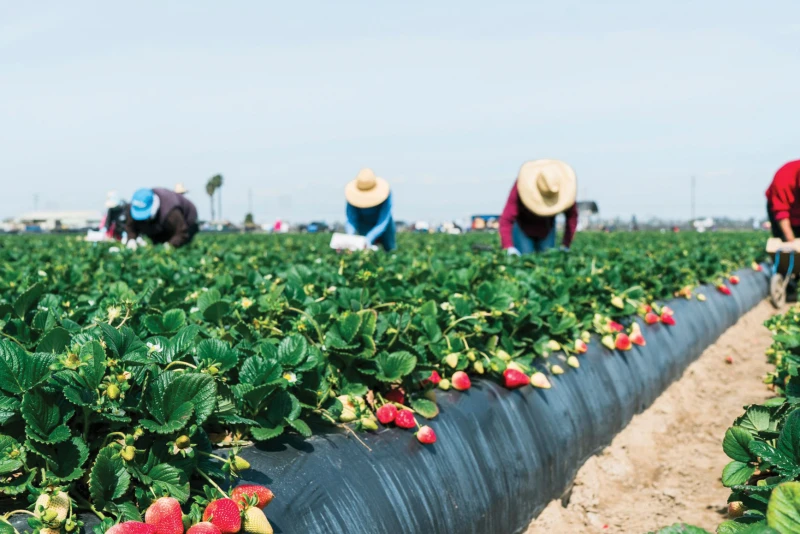
A new temporary rule will allow H-2A workers to stay in the U.S. beyond the current three-year maximum and should give U.S. growers a bigger pool of guest farmworkers to fill their needs.
The Department of Homeland Security, with backing from the U.S. Department of Agriculture said in a news release that the “temporary final rule,” effective upon being published in the Federal Register, will change certain H-2A requirements to help U.S. agricultural employers avoid labor disruptions, protect the food supply, and lessen impacts from the coronavirus COVID-19 public health emergency.
“This is something we had recommended to the Administration as a means to assure that adequate numbers of workers would be available to maintain critical agricultural infrastructure of the U.S. during this crisis,” Michael Marsh, president and CEO of the National Council of Agricultural Employers, said in an email. “We are pleased that DHS and USDA have worked together to quickly implement this temporary rule.”
The Produce Marketing Association also commended the Department of Homeland Security and the USDA for their agility in creating the temporary rule.
“PMA is pleased to see the rule change, emphasizing that maintaining a lawful, agricultural labor force during the COVID-19 public health emergency is critical to ensuring our industry has the capacity to continue to safely provide healthy, fresh produce to U.S. consumers,” PMA said in a statement.
Details
The federal agencies did not say in the release just how long the temporary rule will be in place.
Under the new rule, the release said an H-2A employer (grower) with a valid temporary labor certification who is concerned that workers will be unable to enter the country due to travel restrictions can start employing certain foreign workers who are currently in H-2A status in the United States immediately after the United States Citizenship and Immigration Services receives the H-2A petition. However, the workers can’t be employed any earlier than the start date of employment listed on the petition.
To take advantage of this time-limited change in regulatory requirements, the H-2A worker seeking to change employers must already be in the United States and have valid H-2A status, the release said.
“At no point is it acceptable for employers to hire illegal aliens,” the release said.
The temporary changes, the agencies said in the release, will encourage the “continued lawful employment of foreign temporary and seasonal agricultural workers” during the COVID-19 national emergency.
Agriculture Secretary Sonny Perdue said the additional flexibilities provided by the Department of Homeland Security temporary rule will be welcomed by growers.
“Providing flexibility for H-2A employers to utilize H-2A workers that are currently in the United States is critically important as we continue to see travel and border restrictions as a result of COVID-19,” Perdue said in the release. “USDA continues to work with the Department of Homeland Security, the Department of Labor and the Department of State to minimize disruption and make sure farmers have access to these critical workers necessary to maintain the integrity in our food supply.”
Related articles
Department of State waives interview requirement for H-2A workers