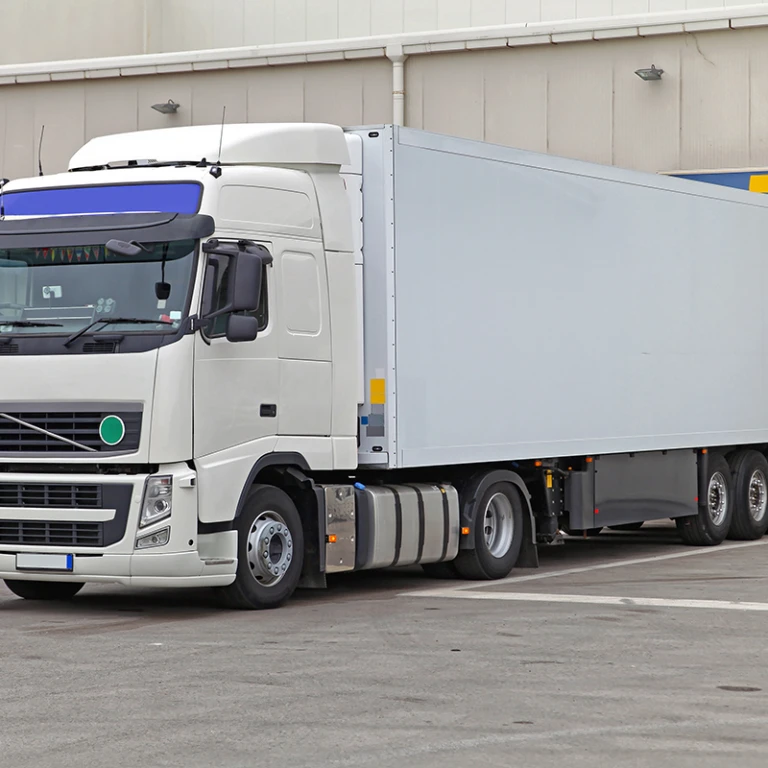
Refrigerated trucks will help distribute millions of doses of COVID-19 vaccine shipments in the months ahead, but the operation isn’t expected to disrupt the produce supply chain.
On Dec. 11, the U.S. Food and Drug Administration authorized the emergency use of the Pfizer/BioNTech vaccine against COVOID-19 in individuals 16 years and older.
In collaboration with Operation Warp Speed, Pfizer and BioNTech, as well as other vaccine companies are expected to deliver hundreds of millions of vaccine doses to Americans by the end of 2021, according to a news release from Pfizer. Under Operation Warp Speed, the Department of Defense in partnership with agencies within the Department of Health and Human Services, including the U.S. Centers for Disease Control and Prevention, will manage allocation and distribution of the vaccine in the U.S., according to the release.
In early December, the U.S. Department of Transportation said that “all of its necessary regulatory measures have been taken for the safe, rapid transportation of the coronavirus disease 2019 (COVID-19) vaccine by land and air.” The agency said it has made preparations to enable the immediate mass shipment of the COVID-19 vaccine. The department has granted a nationwide exemption to hours-of-service regulations for trucking companies and commercial drivers providing direct emergency assistance.
Transportdrive.com reported that Pfizer has said 12 trucks will be needed on a daily basis to transport the vaccine doses, which will be packed in dry ice to keep the medicine cold. Pfizer also indicated to Transportdive.com it had contracts with DHL, FedEx and United Parcel Service to distribute the vaccine.
On a fact sheet about the vaccine, Pfizer said the vaccine will be shipped with designed,temperature-controlled thermal shippers utilizing dry ice to maintain recommended storage temperature conditions of -70°C±10°C for up to 10 days unopened.
Expedited carriers, such as FedEx and United Parcel Service, shouldn’t have difficulty devoting resources to the vaccine distribution, said Kenny Lund, executive vice president of ALC Logistics, La Canada, Calif.
“Compared to all the freight they handle, the vaccine shipments are but a small fraction,” Lund said in an e-mail. “It may have a short term effect on companies like UPS and FedEx, but not elsewhere.”
Lund said he does not think the carriers will be shipping the vaccine on the carriers that handle produce. He said the shipments seem to be smaller pallet-sized shipments in containers packed with dry ice. which means they can go on any transportation that can get it there in hours, not days.
“My guess is it will mostly ship on airplanes and expedited LTL carriers,” he said. Most of the shipments will occur after Christmas when more capacity is available.”
Speaking Dec. 10 at a hearing of the U.S. Senate Committee on Commerce, Science, and Transportation, Richard Smith, regional president of the Americas and executive vice president of global support for FedEx Express, said the company has been working for several months on vaccine transportation plans. The company has more than 670 cargo planes and 180,000 ground vehicles, he said.
Wes Wheeler, president of UPS Healthcare, said in his testimony to the committee that the company will monitor all of its vaccine shipments in a newly dedicated 24/7 command center which collects data from all sources including our client’s temperature recorders.