
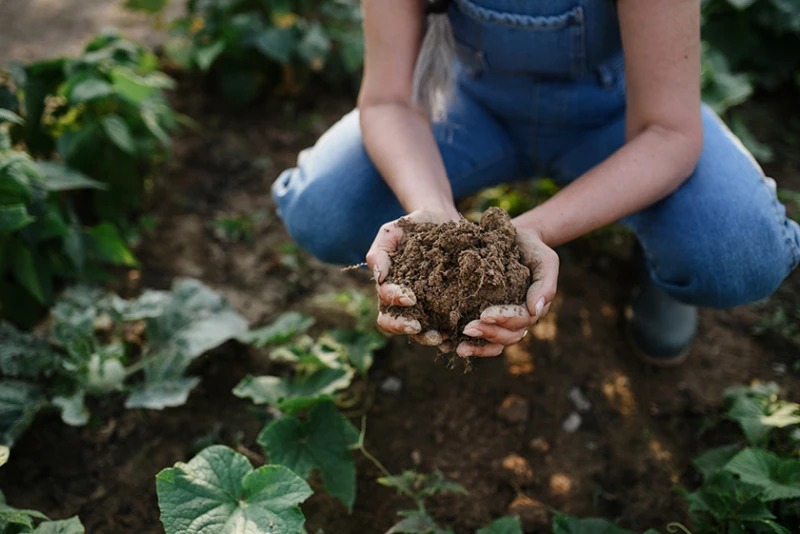
A study from the University of Illinois Urbana-Champaign and Cornell University looked at how organic vegetable farmers’ beliefs about the microbiome influence their soil management practices.
“There is very little research on what farmers think about the soil microbiome and what it means for which agricultural practices they adopt,” said co-author Shadi Atallah, associate professor in the Department of Agricultural and Consumer Economics, part of the College of Agricultural, Consumer and Environmental Sciences at Illinois. “In the long run, we want to understand organic farmers’ incentives to adopt microbiome-friendly practices from an economic perspective.”
The research team surveyed 85 organic vegetable farmers in New York to gauge their microbiome beliefs, farming practices and motivations. The farmers provided soil samples from their field.
“Overall, 96% of the farmers believed that the microbiome on their farm is influencing plant defenses and pest suppression. But there was much more variety in their beliefs about what factors promote a healthy microbiome,” lead author Elias Bloom, postdoctoral research associate at Cornell, said in a news release.
The team also identified belief clusters based on the farmers’ responses.
“We found that farmers who believed on-farm practices such as no-till or cover crops are important for influencing the microbiome also tended to adopt those practices. These beliefs are consistent with what the literature indicates are the preferred practices to support the microbiome,” Bloom said.
The researchers looked at characteristics such as farm size and farmer’s age and how that influenced the adoption of practices.
“Larger farms tend to be less diversified and less likely to adopt no-till and biological mulches. To promote these ecosystem benefits, researchers need to think about how to bring no-tillage and diversified crop production to a larger scale so they can be more manageable for larger farms,” Bloom said.
The authors plan to examine the soil samples collected and analyze the changes in the microbiome to link biology to the understanding of current beliefs.
“Understanding why different farmers might select different practices based on what they believe about the microbiome is a first step to understanding how to incentivize certain kinds of organic practices,” Atallah said. “Eventually, there could be market incentives such as a microbiome-friendly ecolabel on food.”



