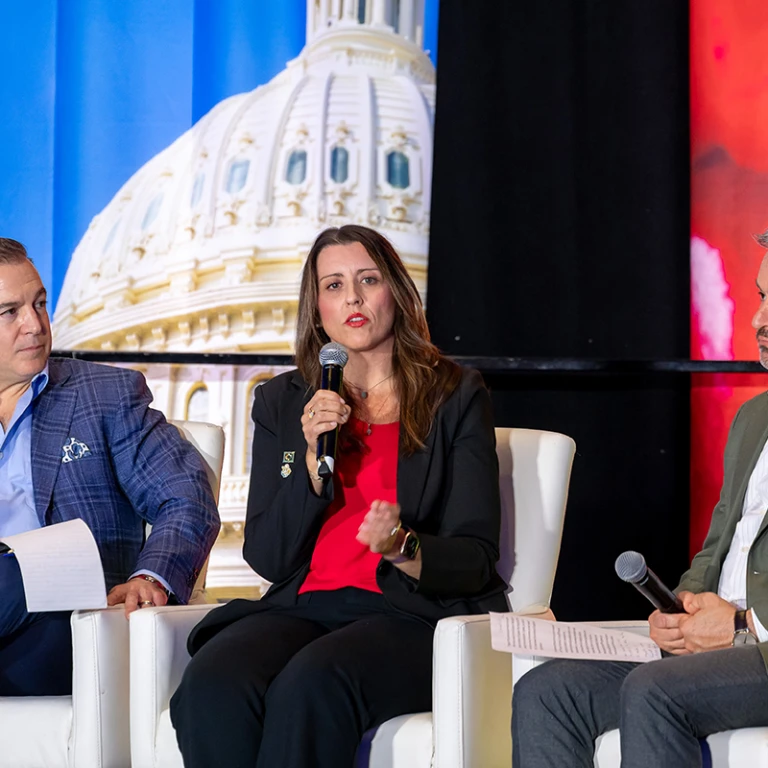
Speaking mainly about the challenges of increasing food production to meet risking global demand over the next 30 years, Jack Bobo, CEO of food consulting firm Futurity, Potomac, Md., first took a moment to talk frankly about COVID-19 during a speech Aug. 20 at the U.S. Apple Association’s virtual Outlook 2020 event.
He said recovering from the COVID-19 pandemic will be easier said than done.
We like to be optimists, but our rose-colored glasses deceive us, he said.
Bobo said people are not very good at imagining futures that are bleak. Nevertheless, he said COVID-19 certainly dimmed the future for many.
“The impact of COVID is going to be felt, not just for the next few months or the next few years, but for decades to come,” he said. “There are people that are graduating from college today and their entire lives are going to be marked by whether or not they find jobs in the next few years.”
In a similar way, Bobo said it isn’t useful think about a return to “normal” after COVID-19.
“When we think of recovery, we think going back to the way things were before, but with COVID, it’s probably more appropriate to think of it in terms of what was the world like before and after World War II, or before and after the oil crisis of the 1970Ss, or the Arab Spring of the 2008-09. The world that we had before the crisis and the world that we saw after the crisis look nothing alike.”
The future has to be constructed in new patterns to account for how people live, work and play, he said.
Questions abound for the global food supply chain, including what will happen with the economy, how much to produce and what the market will look in six months or a year and more.
“For many people this uncertainty is almost overwhelming,” he said. “What we actually know is how people and businesses deal with uncertainty, and what they do is they become more cautious.”
He predicted consumers will reduce their consumption, buy less high-end products and buy products that make them feel comfortable and make them feel safe.
Economic growth also will slow, and organizations and industries that make consumers feel more comfortable will do well.
“This is the sort of trend that is likely to stick around for a while, and it will benefit industries like the apple industry as well,” he said.
I have to say Bobo’s searingly realistic message wasn’t easy to hear, A juicy apple sounds good about now.
The Packer’s COVID-19 Coverage