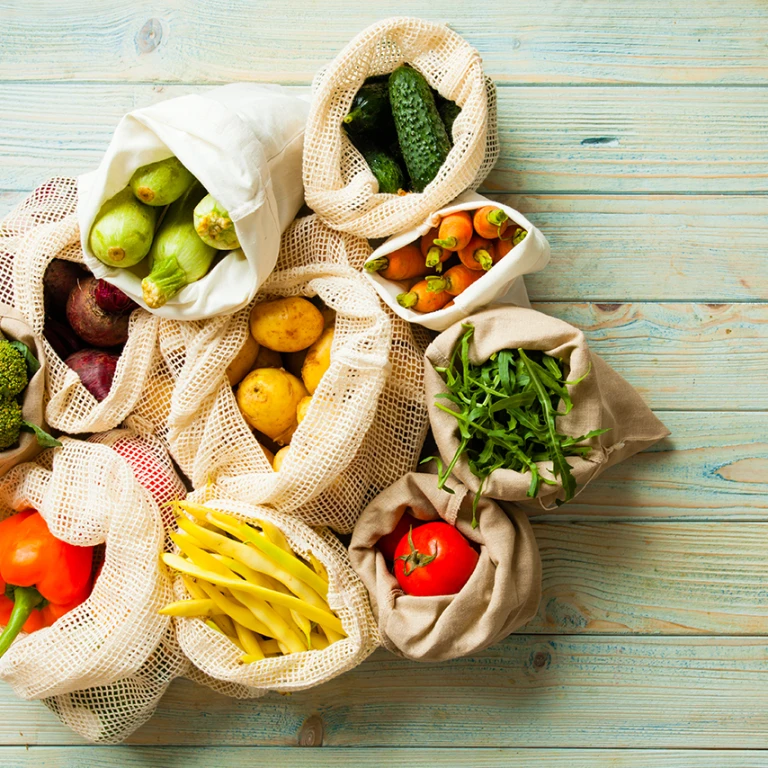
New Jersey is a relatively tiny state — the fourth smallest in the nation — but it hits far above its weight class when it comes to fresh produce.
The state grows well over 100 different types of crops. It also ranked fourth in the nation in 2023 (most recent complete data) for annual receipts on asparagus, cranberries, peaches and spinach, and sixth in the nation for blueberry and squash receipts — contending with agricultural (and literal) giants like California and Texas.
“I know we’re a small state, but we were nicknamed the Garden State first, and there’s a reason,” says Charlie Cade, sales and procurement at Consalo Family Farms/Freshwave Fruit & Produce. “I think we’re the premier growing state, even though acreage would say otherwise.”
New Jersey: Small but mighty and unique
Jeff Wolfe, public information officer at the New Jersey Department of Agriculture, explains New Jersey has almost 10,000 farms, with over 700,000 acres of land in farms. This represents roughly 15% of the state’s land.
There are many unique elements to New Jersey produce farming. For example, the state boasts the longest-running state produce marketing program, and the state and its growers focus on meeting the needs of a diverse customer base and ever-changing market demands with local produce. The state’s unique climate helps them do it, too.
“For a small state, we have a wide range of climates,” Wolfe says. “The advantage of that is it helps our season last longer,” he explained. The growing seasons for produce in the northern half of the state lag two to four weeks behind the southern half. “We can have Jersey produce available for a little bit longer period of time because of that variety and difference in climates.”
Being surrounded by large, dense population centers full of a wide variety of customers also presents a unique opportunity for New Jersey growers.
“We have a very diverse population in New Jersey,” Wolfe says. “We do have some farmers who have made the effort to grow certain different types of crops — maybe not traditional to New Jersey — to meet the needs of people who maybe immigrated from other countries or have traditions from other countries where their families are originally from.”
“Our farmers just do a tremendous job of trying to meet needs,” he adds.
New Jersey’s location also means growers can access customers up and down the eastern seaboard.
“We’re within five hours of several million people and we have very good, short transportation times,” Wolfe says. “So, if you get it from New Jersey, it’s still going to be fresh because our stuff doesn’t have to spend much time on the road in transit to reach places. Anything delivered from us up and down the East Coast is still going to be fresh.”
Jersey Fresh: A boon to local growers
New Jersey has capitalized on the ability of its growers to deliver fresh produce and market it through its Jersey Fresh program. The state produce marketing effort has been around for 41 years, making it the oldest continuously running program in the nation. And, as the name implies, freshness is a key focus.
“We like to say it’s possible that it was picked in the morning, then you bought it that afternoon, and it’s on your plate for dinner all in the same day,” Wolfe says.
Wolfe adds that recent survey data shows 80% of New Jerseyans recognize the brand. For those who don’t, the program has been trying something new in the past few years: Flying the banner along the Jersey Shore during the summer. He says the program is also capitalizing on the traffic in the heavily populated areas, using digital billboards to highlight different produce in season.
The growers The Packer talked to had nothing but praise for the Jersey Fresh program. Steve Specca, owner of Specca Farms, calls the program one of the best ways New Jersey customers can come to appreciate buying local, something he feels is enormously important.
“It starts with the customer. If the customers are supportive of local — if they understand that what they’re getting is American made and small town made, and that sort of thing is important to them — that’s what’s really going to help farmers like me.”
Cade describes the program and serving New Jersey customers as Consalo’s bread and butter.
“Aside from us having our own great label and our own great operations, that extra assurance of the Jersey Fresh logo is kind of a guarantee,” he explains. “Every retailer in the state wants New Jersey products. They don’t want anything else. They don’t want somebody else’s label. They want Jersey Fresh.”
Consalo constantly develops to serve customers
Knowing what consumers want and will enjoy is a big deal to Consalo Family Farms/Freshwave Fruit & Produce. Cade explains Consalo is big on marketing and customer relations.
“We do a lot of work with our vendors and our growers, as well as our retailers, on what they see. ‘What is easier for you to grow and pick versus what the consumer market actually demands and wants?’” he says.
He says they have been seeing an increased demand for specialty produce items, and especially value-added produce items. He uses examples of specialty lettuces like hearts of romaine, specialty radish varieties and radishes cut in chips or matchsticks that are ready to use.
Meeting these kinds of customer demands doesn’t happen overnight, however.
“There’s a lot of research and development and trials that go into it,” Cade says. “We’re really happy that that’s one of our primary focal points.”
Consalo Family Farms has a lot of R&D efforts underway. Speaking generally, Cade describes iceberg trials that have been in the works for three years and should be moving to wider production this fall. He also mentions work on romaine hearts, specifically looking for a variety that grows well on the farm and has a specific flavor profile and eating experience: crunchy, firm, crisp and with a consistent bite.
“That’s one thing that maybe some people don’t take as seriously, but we do,” he says.
While Cade admits he’s “a veg guy” and likes focusing on the vegetable side of the operation, there’s a lot going on at the fruit side of Consalo as well. He points to new varieties of blueberries that will be in production this year and a summer citrus deal coming out of South Africa. He even hints at other upcoming projects.
“We’re happy that we’ve been doing trials, and we’re making a lot of headway on one of our special products that we think is going to be a premier item coming up.”
He describes the company as ever evolving and continuously developing. “We don’t say no. It’s just not in our vocabulary,” he says. “And we’re not afraid to try anything, even if it doesn’t work. There’s plenty of stuff we’ve done that just didn’t take. But we’re willing to invest to try it, and that’s a unique thing to us and to this marketplace.”
That developmental mindset applies to the physical reality of the company as well as the products they offer. In 2023, the company finished a major cold storage and packing facility expansion. Cade says this expansion — and the work that preceded it — has had a massive, positive impact on the company’s ability to serve its customers even as demands change.
“We expanded all of our growing operations before we expanded that building. It’s part of keeping up, revamping and continuing to grow,” he says. “We’re a 52-week operation, so we do everything we can to seal up any holes so that we can keep servicing our customers. That’s the name of the game.”
Specca Farms growing to spec for specific tastes
Specca and Specca Farms know a lot about the importance of serving customers in a very tailored way. The vegetable farm began its shift away from wholesaling in the 1970s and toward a you-pick model catering to immigrant and specialty customers.
“Because my grandfather and great grandfather were immigrants to this country, they had a lot of Italian friends who would stop by and buy produce right from the farm because they knew where to get good produce,” Specca says. “Getting it fresh is a lot better than waiting in the store.”
Since then, the Specca family has moved to what Steve Specca calls “tailor-made farming.” He explains that, over the years, members of various ethnic groups have come to the farm to talk to the family about growing specific fruits or vegetables that are beloved from their home country.
“Over the years, our inventory of crops has greatly expanded,” Specca says. While the exact number is always up for debate, he estimates the farm grows around 400 different varieties of fruits and vegetables.
“It’s been our business model to be the most diverse, cater to the customers wants and needs, and be reliable,” he says.
Reliability is important when it comes to running a you-pick farm, Specca says. “Nobody wants to come from three hours away and be disappointed that we don’t have that certain kind of green bean that they like.”
The you-pick model comes with some distinct costs and benefits, according to Specca. On the one hand, the family gets to have a uniquely close and engaged relationship with its customer base. The you-pick model also means the farm sidesteps harvest-related labor demands, packaging and transportation — major considerations for the most vegetable farms.
On the other hand, the model has some distinct downsides. According to Specca, it’s not the most efficient, people don’t always pay for everything they pick and there are different labor considerations when it comes to harvesting.
“The grass has to be mowed very well. The driveway has to be weed whacked and perfect. All those things that don’t pay the bills,” he explains. Having staff on hand to answer consumer questions, direct them to the proper fields and generally maintain order and smooth operations is all necessary, even if it’s not the usual form of harvest time labor.
“It’s not the best system, but it works for us,” Specca says. “We do well. We’re not rich by any stretch of the word, but this is the dream job. People work three jobs to be a farmer.”