
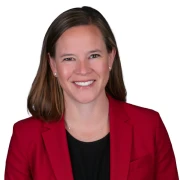

Biologicals have a reputation problem, and Andee Wallace knows it.
“That’s a very common sentiment — having tried the products and been dissatisfied,” she says, describing the grower who has tried a biological crop protection product, watched it underperform, and written off the whole category.
Wallace is founder and CEO of Robigo, a Cambridge, Mass.-based biotech company that just closed a Series A round led by Leaps by Bayer, with participation from Illumina Ventures, SVG Thrive, Congruent Ventures and Endeavor8. The round — the dollar amount was not disclosed — will fund commercial launch of two engineered microbial biopesticides and expand the company’s pipeline into additional soil-borne pathogens in broadacre crops, a market Robigo pegs at $10 billion.
“For us, efficacy is definitely the thing we’re focused on the most. Historically, there’s been a pretty significant gap between the synthetic chemical pesticides that everyone knows and this newer, more sustainable, safer product class called biologicals,” Wallace says. “We hear time and again that there’s frustration from growers about the lack of performance of biologicals, and that’s really where we think our technology can come in and solve it.”
The bet behind the round is that Robigo’s answer to the credibility gap is a scientific one: don’t rely on what a microbe does naturally — engineer it to do more.
“Historically, biologicals, especially microbial products, have been reliant on the microbes that are naturally out in the environment, so you’re constrained by what those microbes can naturally do,” Wallace says. “What’s unique about Robigo’s products is that we let go of those handcuffs — we improve the microbes beyond what they’ve naturally been able to do. That means stronger performance, activity against diseases they otherwise wouldn’t have been able to target and control.”
A platform, not just two products
With its ARGO platform, Robigo computational design to engineer microbial traits and cuts new-product development from an industry standard of three to five years down to under 20 months. The platform has already produced a pipeline; the first two products from it are now in late-stage development.
The lead product targets Sudden Death Syndrome (SDS) in soybeans, a disease which causes an estimated $200 million to $500 million in annual losses for U.S. soybean farmers. Wallace says their product controls the disease at half the cost.
“In our first year of field trials, we ran several trials across the Midwest, and on average, our product performed equal to the leading chemical pesticide seed treatment for that disease (SDS), which we were really excited to see,” Wallace says.
The second targets fusarium wilt, a top disease problem for lettuce and berry growers. The company is citing a 3x yield improvement over untreated controls.
“In that particular trial we had very high disease pressure, so I don’t want to say we’ll guarantee 3X yield improvements in any trial we run — but under really high disease pressure, we saw really strong recovery, and we did deliver that 3X increase in yield,” Wallace says.
How These Microbes Aim to Be Different
“The driving piece there is that our product is a microbe,” Wallace says. “These are microbes that are easy to manufacture — there’s a ton of industrial-scale fermentation capacity, we grow them just like you’d ferment beer, and so it’s very cheap to produce our product. Compared to synthesizing complex chemistries, we’re just growing very cheap biomass, and we use a very little amount of the microbial product because they’re living organisms — when we put them out into the field, they themselves can replicate and continuously produce that active ingredient that’s giving the performance results we’re seeing.”

A recurring barrier to biologicals adoption has been practice change — special handling, storage or application requirements that don’t fit how growers already operate. Wallace says Robigo designed around that problem deliberately.
“Our lead product for soybean is a great example — it’s designed to be a one-to-one drop-in replacement for the chemistries growers use today,” she says. “Our microbes can be handled just like the chemistry product; they’re applied onto the seed as a seed treatment. They don’t require any cold chain storage — they’re just as shelf-stable. In terms of what the grower actually interacts with, it’s just a treated seed, so they plant it as they normally would. Nothing else is required.”
She says the company has also run its own compatibility trials against other seed-applied chemistries.
The company targets a 2028 commercial launch for the SDS product and 2029 for the fusarium wilt product. Wallace says the real gate on that timeline isn’t manufacturing — it’s regulatory review. Distribution and retail partnerships have not been disclosed.



