
Romaine

This new item features a smaller core, which results in more usable product per head and reduced trim loss.

The Food Safety Modernization Act’s new traceability final rule, the Leafy Greens Marketing Agreement’s leafy greens assessment tool and the “Romaine Test and Learn” study seek to raise the bar and improve food safety.

What you need to know about the temporary, but heightened requirements to import romaine or salad mixes containing romaine to Canadian markets from Sept. 28 to Dec. 20, 2023.

The two-year “Romaine Test and Learn” study will collect and analyze food safety data from California LGMA members in an effort to analyze trends, gain insights and raise the bar for food safety in romaine production.

“Planting schedules just got thrown completely off kilter this year, and that just ripples through a season,” Mary Zischke, Grower-Shipper Association of Central California told The Packer.

Leafy green grower aims to grow 17 million pounds of romaine annually in new central Texas greenhouse facility, increasing romaine production twofold.

During a recent string of Thanksgiving holidays, romaine lettuce has not been in any news related to foodborne outbreaks. And that hasn’t happened by chance, says guest columnist and former FDA official Frank Yiannas.

The California Leafy Greens Marketing Agreement has recently adopted Western Growers’ GreenLink platform to collect and analyze food safety data from its member companies.
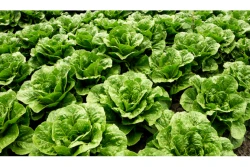
As food safety audits of leafy greens continue during the pandemic, California Leafy Greens Marketing Agreement members have access to new tools streamlining the audit data.

This information, provided by the U.S. Department of Agriculture’s Agricultural Marketing Service, shows week-by-week shipments and f.o.b.s for commodities from shipments for the fresh market.

Monterey County’s top four most valuable crops remained unchanged from 2018 to 2019, led by leaf lettuce, which saw an increase of almost 15%, boosted by better pricing for romaine.

The California Leafy Greens Marketing Agreement has made more than 50 changes to rules as the group continues a review of its practices following E. coli outbreaks in recent years.

Members of the California LGMA, who grow an overwhelming majority of the lettuce and other leafy greens in the state, and 80% of the U.S. lettuce, say they’re capable of quickly tracking recalled products.

As the fall/winter growing season in Yuma, Ariz., approaches, the Arizona Leafy Green Marketing Agreement has approved new water and field metrics.
With added food safety compliance costs of perhaps $1 to $2 per carton, the complications are just beginning for California Salinas Valley romaine shippers and Canadian importers.
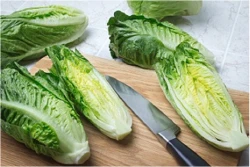
New Canadian food safety import requirements for U.S. romaine lettuce could cost the Canadian industry between $11 million and $13 million per week.

The FDA is investigating two E. coli outbreaks, and although their origin is unknown, the strains are genetically related to separate outbreaks in 2018 and 2019 that were traced to romaine lettuce.

Hydroponic vertical farming company Kalera, Orlando, Fla., is planning to begin construction on a production facility in Seattle in 2021, which joins a growing list of expansions the company plans next year.
The Arizona Leafy Greens Marketing Agreement has adopted more stringent water quality metrics in preparation for the coming season.

The Food and Drug Administration will have a public meeting to discuss its New Era of Smarter Food Safety.

Fresh Express, Orlando, Fla., has six new Gourmet Kits Salads Bowls launching in select markets.

A meeting designed to shed light on the FDA’s New Era of Smarter Food Safety initiative is so popular that no spots are available, and the webcast of the meeting has also hit the maximum number allowed.

As the number of E. coli cases linked to romaine has risen to 40, federal health and regulatory officials are warning consumers not to eat romaine lettuce originating from Salinas, Calif.
Sen. Kirsten Gillibrand, D-NY, has introduced a bill designed to allow regulators easier access to animal farms during investigations into the source of foodborne illness outbreaks.

Beyond the painful toll on those who have been stricken, the tragedy is that the association between romaine lettuce and a foodborne outbreak linked to the E. coli pathogen has become predictable.
Processor Missa Bay LLC has recalled more than three dozen salad products with romaine as investigators search for a cause of an eight-state E. coli outbreak with 17 cases.