
Food Safety

The United Fresh Produce Association is presenting a web seminar concerning foodborne illness outbreaks.

The Food and Drug Administration’s New Era of Smarter Food Safety and corresponding “blueprint” that guides the process are not a quick fix to outbreaks that led regulators to seek new answers.

Small growers can find new markets by implementing food safety practices, a new study from Cornell University reveals.

The Consumer Goods Forum, a global group of retailers and marketers that created the Global Food Safety Initiative, has a new initiative to create a benchmark for sustainability audits.

Texas A&M researchers have created a coating that battles cross-contamination of produce. Researchers say that the coating can be applied to surfaces like conveyor belts and collection buckets.

Dave Corsi chairman, of the Center for Produce Safety’s board of director for two years, has been succeeded by Vic Smith.

California organic certifier CCOF has received high marks for its GlobalG.A.P. program.

Austin, Texas, health officials are investigating an outbreak of Cyclospora infections.

When Escondido, Calif.-based Henry Avocado opened its new packing and distribution center in 2018, food safety was top of mind.

Food and Drug Administration official Mark Moorman acknowledges that the “smarter” era of food safety has not yet arrived.

The California Leafy Greens Marketing Agreement has made more than 50 changes to rules as the group continues a review of its practices following E. coli outbreaks in recent years.

Three federal agencies are hosting a web seminar to update food companies on COVID-19 pandemic operating guidelines.

Prima Wawona peaches involved in a recall in the U.S. and Canada because of salmonella were shipped to more than a dozen other countries.

Members of the California LGMA, who grow an overwhelming majority of the lettuce and other leafy greens in the state, and 80% of the U.S. lettuce, say they’re capable of quickly tracking recalled products.

The Food and Drug Administration has proposed new traceability rules that seek elevated record-keeping for many fresh produce items, from all fresh-cut products to leafy greens and tomatoes.

The Food and Drug Administration’s proposed rule is called “Requirements for Additional Traceability Records for Certain Foods.”

Ontario health officials are investigating an outbreak of salmonella associated with microgreens from Sunsprout Natural Foods.

As the fall/winter growing season in Yuma, Ariz., approaches, the Arizona Leafy Green Marketing Agreement has approved new water and field metrics.

One hundred employees of Ball’s Food Stores, Kansas City, Kan., have been certified by the American National Standards Institute and the Conference for Food Protection.

The International Association for Food Protection’s annual meeting will be a virtual event this year.

The Sprout Safety Alliance has scheduled its next training course for growers.

Leafy-greens-focused traceability pilots being conducted by industry operators now will help reveal insights about industry gaps in traceability.

Frank Yiannas said the COVID-19 pandemic reinforced the necessity of public-private partnerships and confirmed the value of creating more digital-based record-keeping for the food system.

The Produce Marketing Association and Center for Growing Talent have announced the recipients of four annual awards honoring industry members during virtual Fresh Summit events..
The United Fresh Produce Association is accepting applications for class two of its Produce Safety Immersion Program.
A United Fresh Produce Association web seminar on root cause analysis will feature food safety experts from three industry trade associations.
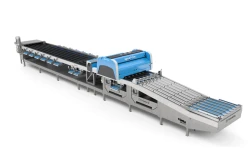
Compac, a Tomra Food company, has introduced a new sorting platform designed for the future, with a focus on food safety, sanitation and traceability feature.

The Center for Produce Safety has chosen 14 more projects to fund, from research on the survival of viruses in surface water to the role of dust in transferring foodborne pathogens.
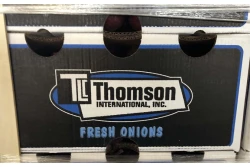
The Food and Drug Administration has declared the Salmonella Newport outbreak that was likely caused by red onions from Thomson International Inc. is over.
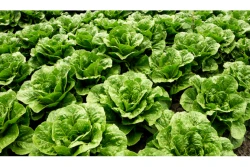
With added food safety compliance costs of perhaps $1 to $2 per carton, the complications are just beginning for California Salinas Valley romaine shippers and Canadian importers.