
Food Safety

Investigators continue to search for the source of an E. coli outbreak that has sickened 172 people in 32 states, but a straightforward solution has not been forthcoming.

The FDA is still working to find answers to the fundamental questions about the outbreak tied to Arizona romaine, more than one month after the initial alert was issued by the CDC.
In the wake of an E. coli outbreak tied to romaine, numerous consumer groups are calling for the FDA to mandate more stringent traceability measures for companies that handle leafy greens and other “high-risk” food.
The CDC is no longer recommending that consumers avoid romaine lettuce from the Yuma growing region.

We all love “fails” on the internet, as long it is not us.

The Centers for Disease Control and Prevention reported an outbreak of Salmonella Adelaide linked to fresh-cut melons distributed by Caito Foods LLC is over, but health officials were unable to find a common source.
FDA officials looking into the source of the cyclospora in McDonald’s salads found two samples of U.S.-grown romaine with the parasites, although they weren’t connected to the outbreak attributed to the salads.
The Food and Drug Administration is considering a policy of releasing the names of retailers who have products involved in outbreaks that could result in illness or deaths.

iTradeNetwork has upgraded its flagship Order Management Suite to make it easier to comply with the Safe Food for Canadians Act.

Canada’s Fruit and Vegetable Dispute Resolution Corp. has received numerous calls from companies importing U.S. romaine regarding who’s responsible for losses in the E. coli outbreak in both countries.

With the Safe Food for Canadians Act and the Safe Food for Canadian Regulations going into effect in January, the Canadian Food Inspection Agency has published an overview of requirements for fresh fruit and vegetables.
Government agencies are still investigating a California e.coli outbreak. Nearly 60 people became ill across the country after eating romaine lettuce.
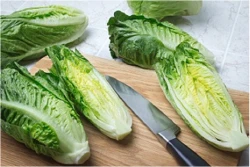
With no new cases since mid-November, the E. coli outbreak in Canada appears to be over, and a federal health agency is no longer advising Canadians in affected areas to avoid eating romaine.

Scott Gottlieb, the Food and Drug Administration commissioner whose two-year tenure has included oversight of recent romaine outbreaks and implementation of many Food Safety Modernization Act regulations, has resigned.

The Alliance for Food and Farming has an updated website — safefruitsandveggies.com — to better serve a growing base of consumers, dietitians and others looking for science-based information on fresh produce.

Comments are due on April 22 on the Food and Drug Administration’s Guide to Minimize Food Safety Hazards of Fresh-cut Produce: Draft Guidance for Industry.

Members of the California Leafy Greens Marketing Agreement have adopted new rules requiring them to sanitize “open source” used water for overhead irrigation following recent E. coli outbreaks that led investigators to suspect water as a cause.

Golden Pearl Mushrooms Ltd., Richmond, British Columbia, is recalling pea shoots grown in Canada after the Canadian Food Inspection Agency reported a positive test for Listeria monocytogenes.

Western Growers, Irvine, Calif., has introduced an interactive directory to connect growers to agricultural technology start-ups.

The number of people with salmonella linked to fresh-cut melons shipped by Caito Foods has increased, and the Food and Drug Administration has released a list of hundreds of retail outlets that received the products.

The California Leafy Greens Marketing Agreement has partnered with the Produce for Better Health Foundation and Dallas-based dietitian consultant Neva Cochran to educate consumers on the food safety steps growers take.

Two workshops will bring members of the fresh produce and livestock industries together to start a dialogue that could be beneficial in preventing foodborne illness outbreaks.

The U.S. Food and Drug Administration has released draft guidance to help growers determine set their food safety plans.
The Food and Drug Administration and the American Chemical Society are providing a series of biannual training sessions focusing on chemical science related to food safety.

The Center for Produce Safety is offering up to $1 million in regional grants for researchers to study when and where ag water treatments are appropriate, and what options are available to growers.

With new federal rules fast approaching and produce recalls causing a domino effect nationwide, New Jersey growers are ramping up their food safety certifications and plans.

Though its work is far from done, funding for the Produce Safety Alliance is scheduled to run out by September 2019.
Twenty-eight more illnesses have been attributed to the E. coli outbreak linked to romaine from Yuma, bringing the total to 149 cases.
Health officials in Minnesota have linked 10 illnesses in the state to the nationwide E. coli outbreak connected with romaine from the Yuma, Ariz., growing region.
A multistate outbreak connected to romaine from Arizona continues to have consequences for romaine from California.