
Produce Research

The Packer’s Tom Karst visited July 28 with Ann Beaulieu, vice president and director of research & development and regulatory affairs at AgroFresh and Fernando Edagi, commercial technical manager for the company.

Recovering from the human and economic toll of the COVID-19 pandemic won’t be easy.

David Cain, founder of International Fruit Genetics and the table grape breeder of Cotton Candy and other unique varieties, has received the 2020 Wilder Medal from the American Pomological Society.

Produce industry associations are revisiting presentations from the 2020 Center for Produce Safety Virtual Research Symposium.

Duncan Family Farms, Goodyear, Ariz., has installed an irrigation treatment system that’s highly effective, controllable and transportable.

Hazel Technologies Inc., Chicago, is presenting the Grape Quality Summit.

The Wonderful Co., Los Angeles, is offering up to $1 million for a solution to the 50,000 tons of pomegranate husks generated each year for the production of Pom Wonderful juice.

As 2021 approaches, there are multiple signs mushrooms will be one of the top trending foods for the year ahead.

The Produce Marketing Association recently submitted comments to the EPA on a proposed rule for pesticides.

CHICAGO — Produce companies are competing for scarce talent in a tight economy, and that is translating to more generous benefits and higher compensation compared with a few years ago.

Avocados From Mexico has partnered with Walmart again, with more than 4,000 U.S. stores directing shoppers to avocado content through an online Chatbot.
Last year proved to be a difficult year for the leafy greens sector, with three outbreaks linked to romaine lettuce.

That cucumber shouldn’t be trashed; it is merely a senior citizen.
A group of researchers are developing a risk-based model for customized produce sampling programs that take variables such as field size and commodity being tested into account.

Grower-shippers must pace their conversion of land to organic production or risk losing premium pricing, a new report from Rabobank says.

U.S. Senator Kirsten Gillibrand, D-N.Y., has asked the U.S. Department of Agriculture to investigate why produce-grower prices have stayed stagnant or declined while prices have increased along the supply chain.
Two free web seminars on listeria are being presented by universities that have received grants from the Center for Produce Safety.

The Mushroom Council, Redwood Shores, Calif., is investing $1.5 million in nutrition research to look into the health benefits of eating mushrooms.
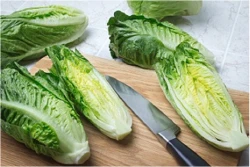
The Produce Marketing Association and United Fresh Produce Association are presenting a web seminar on the findings of the Romaine Task Force.

The Produce Safety Alliance has developed a document explaining the difference between cleaning and sanitizing after some growers expressed confusion to regulators.

The volume of sales for the U.S. 2018-19 mushroom crop is pegged at 846 million pounds, down 3% from last season in comparable states, according to a December report from the U.S. Department of Agriculture.
Consumers who want a strong immune system are looking to fresh produce.

Hazel Technologies Inc., Chicago, has seen positive results in trials with its shelf-life extension product on apples.

The Organic Farming Research Foundation (OFRF) and Organic Seed Alliance (OSA) have extended the deadlines for surveys seeking input from organic producers, and those transitioning land to organic.
The Center for Produce Safety has released the agendas for the five weekly web seminars that have been scheduled in place of its annual research symposium.

Carrots, celery, oranges, grapes, and cabbage are among plant-based foods that have the largest number of anti-cancer molecules, according to new research from the Imperial College of London.

Pineapple, collard greens, plant-forward kebabs, parsnips and grapefruit are either trending now or will be soon, according to the latest United Fresh Produce Association’s “Fresh Insights for Foodservice” report.

The Center for Produce Safety has awarded three sets of researchers funds to develop tools that can help growers identify and evaluate food safety risks posed by the proximity of fresh produce fields to farm animals.
The USDA’s Greg Ibach stirred a hornet’s nest when he recently said the agency’s National Organic Program may consider whether gene-edited crops could be allowed for organic growers.

The weight of evidence that points to the health benefits of blueberries is substantial, and a recent paper outlines what is known so far.