
Food and Drug Administration

The Canadian Food Inspection Agency has added to the number of cases of E. coli linked to romaine lettuce in that country.

“No report issued as all commerce is halted by an FDA and CDC advisory not to consume Romaine Lettuce.”

The FDA says romaine lettuce is now safe to eat following the “purge” of product on the market, and grower-shippers agreed to new labeling standards that will include where the lettuce is grown.

The Food and Drug Administration has released a list of the California Central Coast counties it has targeted as the potential origin of E. coli tainted romaine lettuce.

Indoor growers say their romaine should have been excluded from the FDA’s temporary blanket ban — although they agree consumer safety should always come first.

The Food and Drug Administration on Jan. 15 plans to start inspections of high-risk food facilities, which include leafy green processing plants, using mostly unpaid furloughed employees.
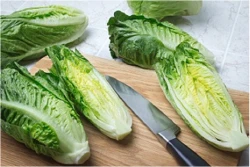
The Centers for Disease Control and Prevention is reporting the E. coli outbreak linked to romaine lettuce from coastal counties in California appears to be over.

The FDA has stopped routine inspections of fresh produce and other food facilities because of the partial government shutdown, but its commissioner says plans are underway to somewhat remedy that.

Registrar Corp. has upgraded its FDA Compliance Monitor, a tool to ensure companies are following Food Safety Modernization Act requirements.

“Kale, eat your vegetables! I shouldn’t have to remind you, of all my kids.”

(UPDATED, March 19) The Food and Drug Administration has finalized new compliance dates for the agricultural water requirements in the Food Safety Modernization Act Produce Safety Rule.
The Food and Drug Administration is urging the produce industry and various organizations studying how E. coli came into contact with romaine grown in Yuma, Ariz., to continue working with the agency on the issue.

Registration is closing for four Food and Drug Administration meetings on proposals for the Food Safety Modernization Act’s Produce Safety Rule.

With a post on their website at 2:30 p.m. Eastern today, the Centers for Disease Control and Prevention dropped a bombshell.

Following the granny smith and golden delicious, the Arctic Fuji apple, engineered to resist browning, has been approved by the Food and Drug Administration.
The FDA is ushering in what it calls a New Era of Smarter Food Safety, with a focus on technology to trace the origin of fresh produce.

The Centers for Disease Control and Prevention reported an outbreak of Salmonella Adelaide linked to fresh-cut melons distributed by Caito Foods LLC is over, but health officials were unable to find a common source.

FDA officials looking into the source of the cyclospora in McDonald’s salads found two samples of U.S.-grown romaine with the parasites, although they weren’t connected to the outbreak attributed to the salads.
The Food and Drug Administration is considering a policy of releasing the names of retailers who have products involved in outbreaks that could result in illness or deaths.

Canada’s Fruit and Vegetable Dispute Resolution Corp. has received numerous calls from companies importing U.S. romaine regarding who’s responsible for losses in the E. coli outbreak in both countries.

Scott Gottlieb, the Food and Drug Administration commissioner whose two-year tenure has included oversight of recent romaine outbreaks and implementation of many Food Safety Modernization Act regulations, has resigned.

Comments are due on April 22 on the Food and Drug Administration’s Guide to Minimize Food Safety Hazards of Fresh-cut Produce: Draft Guidance for Industry.
Two workshops will bring members of the fresh produce and livestock industries together to start a dialogue that could be beneficial in preventing foodborne illness outbreaks.
The U.S. Food and Drug Administration has released draft guidance to help growers determine set their food safety plans.
The Food and Drug Administration and the American Chemical Society are providing a series of biannual training sessions focusing on chemical science related to food safety.
The House of Representatives on March 22 passed a $1.3 trillion spending package, sending it to the Senate for a vote March 23 to avert a government shutdown that would begin that night.

Fresh Express, whose salads were pulled from about 3,000 McDonald’s restaurants after they were linked to a cyclospora outbreak, has a panel of food safety and industry experts to study the parasites.
The Food and Drug Administration’s investigation into the source of an outbreak of cyclosporiasis from McDonald’s salads continues, with a focus on distributors and growers of romaine and carrots in the salads.
The FDA investigation into an E. coli outbreak from Yuma, Ariz., romaine turned up no specific source, but concluded it’s likely contaminated irrigation water from a canal that passes near a cattle operation.
When the Food and Drug Administration tells a food company to issue a recall “or else,” a new document describes exactly what that means.